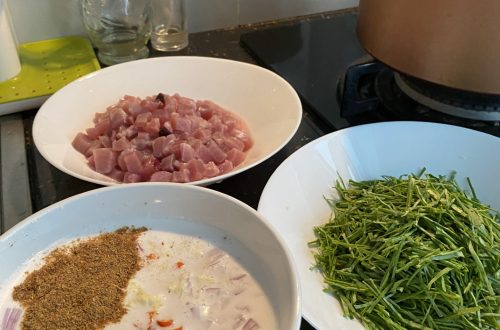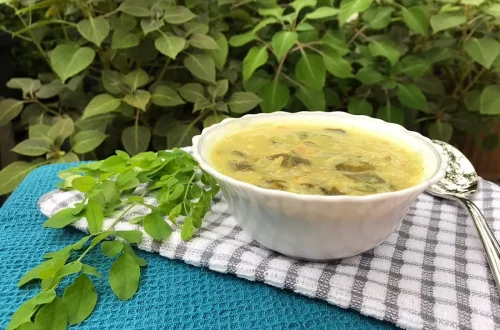
Maldives has always lived in rhythm with the ocean, our islands, our people, our memories, everything is shaped by the sea. So it’s no surprise that one of our oldest and most cherished dishes is Garudhiya, our simple, fragrant fish soup that carries the taste of home.
Garudhiya is one of those dishes we Maldivians grow up eating almost daily. In my home, I don’t remember a week maybe not even a day without it on the table. Whether it’s served with rice, taro, or breadfruit, garudhiya always finds its place at lunch.
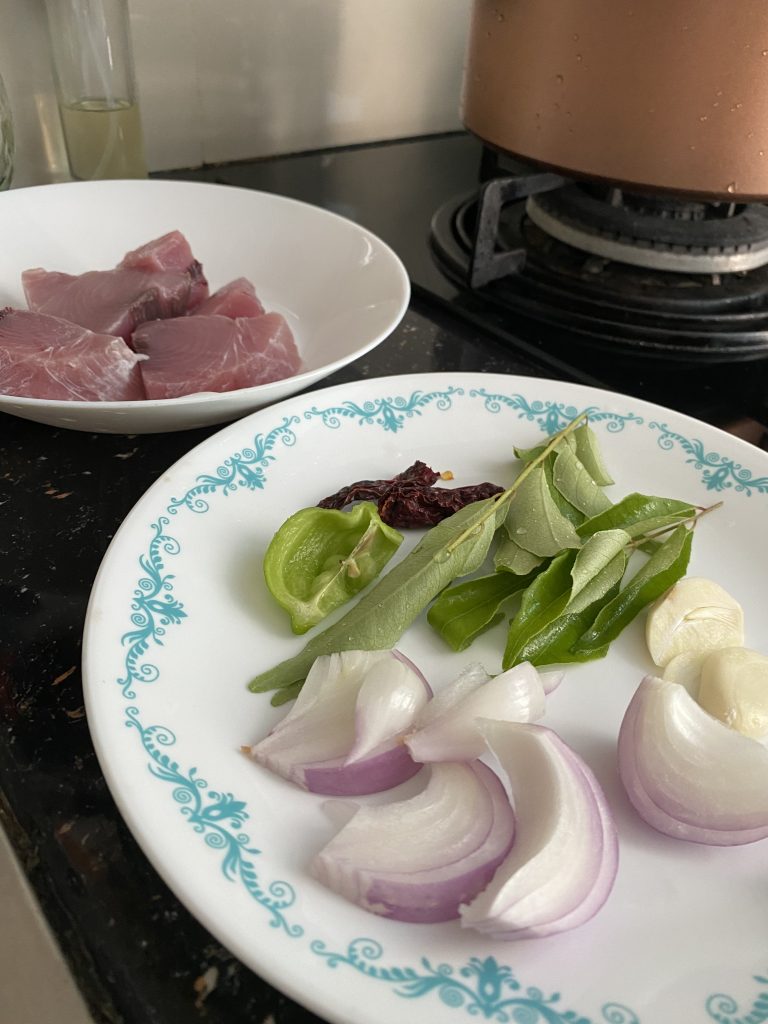
What makes a good garudhiya is, above all else, fresh tuna. In the old days, this was never a problem ,freshly caught tuna was a daily blessing. Now things are different, and most of us store fish in the freezer. I personally don’t love frozen tuna for garudhiya, but if you must use it, yellowfin freezes better than skipjack. When using frozen fish, clean it carefully: slice off the outer layer very thinly to freshen it, remove any dark parts, and then cut the fish into blocks about 2 inches thickness and 4 inches length, not too thick, not too thin.
I know every island and every household has its own way of making garudhiya, but I’ll admit I’m very biased toward my way, especially when it comes to frozen fish. With such a simple dish, the smallest details make the biggest difference. For a family of four, 5–6 blocks of fish with about 5–6 cups of water is perfect. I like a more concentrated soup, so I never dilute it too much.
One crucial step, boil the water with the salt already in it, and don’t wait for a full boil. Add the fish the moment you see bubbles forming at the bottom. This tiny timing detail changes everything it helps you clean the scum easily and makes the flavor purer.
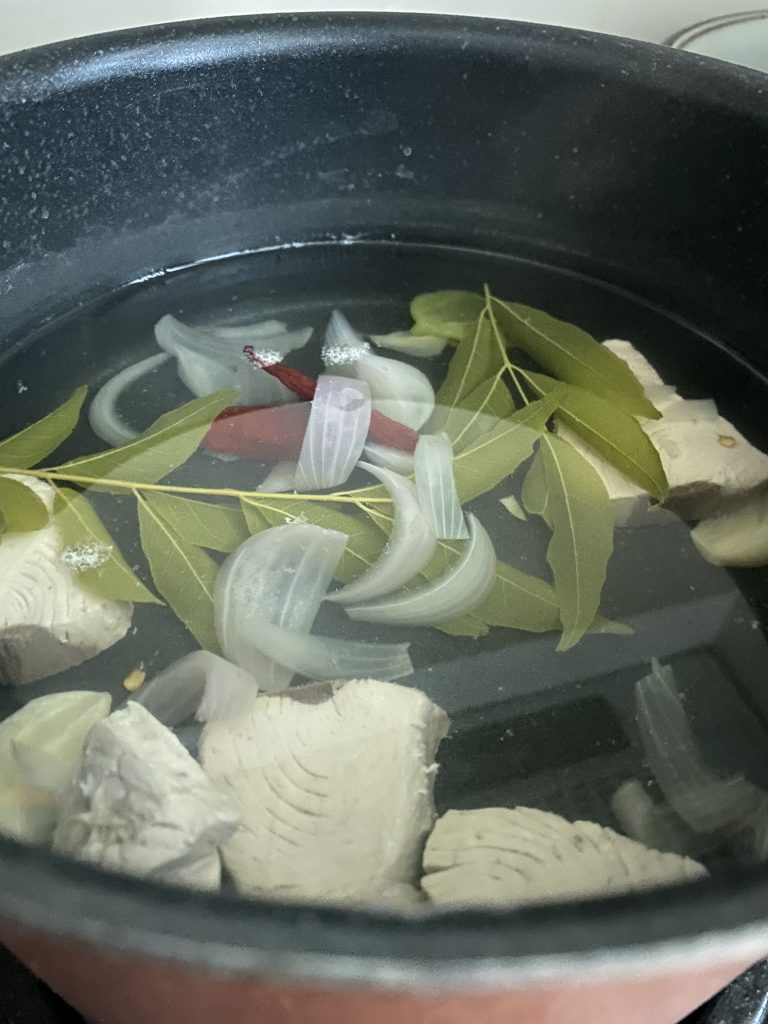
For fragrance, never skip the aromatics: onion, garlic, fresh curry leaves (absolutely essential), and chillies. I prefer fresh chillies, though some times I like using dried ones depending on what is the garudhiya is going to accompany with. And the magic ingredient that lifts garudhiya from good to unforgettable is bilamagu (bilimbi). Add it after skimming the scum, along with the spices, and let everything simmer gently for about 5 minutes in a low heat.
If you follow these little steps, your garudhiya will taste wonderfully fresh and fragrant. A bad garudhiya can ruin a good meal but a good one can make the simplest lunch feel complete.
There’s truly nothing better, especially for us Fuvahmulah-born people, than a bowl of hot garudhiya with cooked taro and freshly scraped coconut on a warm sunny afternoon. It’s nostalgic just thinking about it.
5 Blocks of skipjack or yellow fin tuna
6 Cups of water
11/4 Table spoon salt
1/2 Onion
1 Clove garlic
1 Curry leaf
2 Billimbi
1/4 Chilly or 2 dried chillies
I hope you enjoy garudhiya my way.